Award-Winning Website Design in 2026: What It Actually Takes
Award-winning website design, the kind that lands on Awwwards, FWA, and CSS Design Awards, comes down to five things: one strong concept, ruthless restraint, motion that carries meaning instead of decoration, flawless performance, and obsessive craft in type and spacing. Here is the honest part most guides skip: the vast majority of small businesses do not need an award site. They need a fast, credible one. Premium brands, product launches, and studios that sell on taste are the ones for whom award-grade work earns its cost.
Reading about cinematic websites is not the same as scrolling one.
We rebuilt our own pitch as a scroll film: one continuous scroll, real client footage, no slides. The page is the demo. It takes about a minute.
Search for “award-winning website design” and you get two very different things stacked together: genuine, jaw-dropping craft that took a team months, and a lot of agencies quietly borrowing the phrase. This guide separates them. It explains what the major website awards actually reward, what visibly separates award-grade work from a merely good site, and, most usefully, how to decide whether your business needs award-grade design at all or whether a clean, fast, credible site is the smarter spend. We build both, so this is written to help you choose, not to talk you into the expensive one.
See also: Best cinematic website studios and our best 3D and WebGL web design companies hub.
What “award-winning” website design actually means
“Award-winning” is not a vibe. It points at specific, peer-judged programs where working designers and developers vote on submitted sites. When people picture the pinnacle of web craft, they are usually picturing work from three places. Knowing what each rewards tells you what the phrase is really claiming.
Awwwards
The best-known program in the field. Sites are scored by a jury and the community on design, usability, creativity, and content, and the standouts earn Site of the Day, then Site of the Month and Site of the Year. An Awwwards win is the closest thing the industry has to a shared bar for “this is exceptional”. You can browse the winners on the Awwwards showcase and see the aesthetic that defines the top tier: heavy motion, bold typography, and one clear idea executed without compromise.
FWA (Favourite Website Awards)
One of the oldest recognition programs on the web, running since 2000. The FWA leans toward the technically ambitious and the experimental: immersive WebGL, unusual interaction, and work that pushes what a browser can do. An FWA of the Day tends to signal engineering daring as much as visual polish.
CSS Design Awards
A jury and public vote focused on front-end craft: UI, UX, and innovation. CSS Design Awards recognition skews toward clean execution and interface craft rather than pure spectacle, which makes it a useful signal for product and SaaS teams as well as brand sites.
None of these is pay-to-win in the sense that matters. You can submit, but you cannot buy a Site of the Day. That is exactly why the phrase carries weight, and why any studio, ours included, should never claim awards it has not actually earned.
What separates award-grade work from a good site
Plenty of good sites never win anything, and that is fine. But when you put a genuine award winner next to a competent template build, the gap is visible in a few consistent places. These are the things juries reward and the things that cost real time to get right.
One strong concept. Award sites are built around a single organizing idea, a metaphor, a material, a story, that every section serves. The homepage, the transitions, the copy, and the imagery all point the same direction. Weak sites are a pile of nice sections with no through-line. The concept is the hardest part and the reason a good site cannot be assembled from parts.
Restraint. Counterintuitively, the most awarded work is often the most disciplined. It commits to a tight palette, a small type system, and a lot of deliberate empty space. Amateur “premium” attempts do the opposite: three fonts, five gradients, a carousel, and animation on everything. Restraint reads as confidence, and confidence reads as expensive.
Motion that serves meaning. On an award site, motion has a job: it reveals structure, guides the eye, or makes a product tangible. A scroll-driven build, or a real-time 3D scene on Three.js with scroll timing from GSAP ScrollTrigger, is award-grade when the movement means something. The same techniques used to decorate an empty message just look busy. Juries can tell the difference in seconds.
Flawless performance. This is the quiet dealbreaker. Heavy motion and 3D that jank, stutter, or tank the load time do not win, because judges evaluate on real devices. Award-grade work is optimized obsessively: compressed assets, deferred loading, and a build that stays smooth on a mid-range phone. Beauty that only runs on a workstation is not craft.
Craft in type and spacing. The last ten percent lives in details most visitors never consciously notice: optical spacing, a considered type scale, consistent rhythm, hover and focus states that feel intentional. This is where senior work pulls away from junior work, and it is nearly impossible to fake or template.
Do you actually need an award-grade site?
This is the question the marketing rarely asks, so we will. Award-grade design is a real advantage for the right business and a real waste for the wrong one. Most small businesses convert better with a fast, credible, obviously-clear site than with a slow, ambitious one. The table below is the honest test.
| Signs you need award-grade design | Signs you do not (a clean, fast site wins) |
|---|---|
| You sell on taste, and the site itself is the proof (design studio, architecture, fashion, luxury, agency) | You sell a clear service locally or to SMBs who just need to trust you and contact you |
| You have a launch or a flagship moment that needs to be memorable and shareable | You need to be live and generating leads this week, not this quarter |
| Your competitors already look premium and you are being judged next to them | Your competitors are ordinary and a genuinely good, fast site already stands out |
| A physical product benefits from being shown in motion or 3D before purchase | Your offer is simple and a strong headline plus proof does the selling |
| You have the budget and the timeline for a considered, cinematic build | Every dollar should go to speed, clarity, and conversion, not spectacle |
| Being screenshot-worthy drives real business (press, partnerships, recruiting) | Nobody will ever choose you because your scroll animation was beautiful |
If you landed mostly in the right column, spend on a clean, credible, fast build and put the rest into traffic and offer. If you landed in the left column, award-grade craft is not vanity, it is a competitive moat, and it is worth doing properly.
What award-grade work costs, honestly
Cost is where the “award-winning” phrase gets slippery, so here are honest numbers. The following are general 2026 market ranges, not quotes from any specific studio, and you should verify current pricing with anyone you brief.
- Top flagship studios (the agencies behind much of the Awwwards Site of the Year work) typically price a single bespoke site in the six figures, often from around $60,000 and well past $150,000, staffed by a full creative team over months. That is the right call for a global brand launch and overkill for almost everyone else. Market range, not a DappaSol price.
- Boutique and freelance award-caliber builders sit lower, but a genuinely cinematic, custom scroll or 3D site is still real senior time. Below a certain price, “award-quality” almost always means a template with a plugin dropped on top.
For a full breakdown of what these builds should cost and why, see our guide on 3D and WebGL web design companies, which covers the pricing bands in detail.
Where DappaSol fits, honestly
Straight answer, because the brief for this guide is honesty: we do not chase award submissions or claim specific trophies, and we will not pretend otherwise. What we do is build cinematic, screenshot-worthy sites with the same craft the awards reward, senior-led and founder-direct, at a fixed price agreed up front, with 100% code ownership handed to you. Our senior engineers' work has shipped inside ShapeShift, CoinDesk and Komodo.
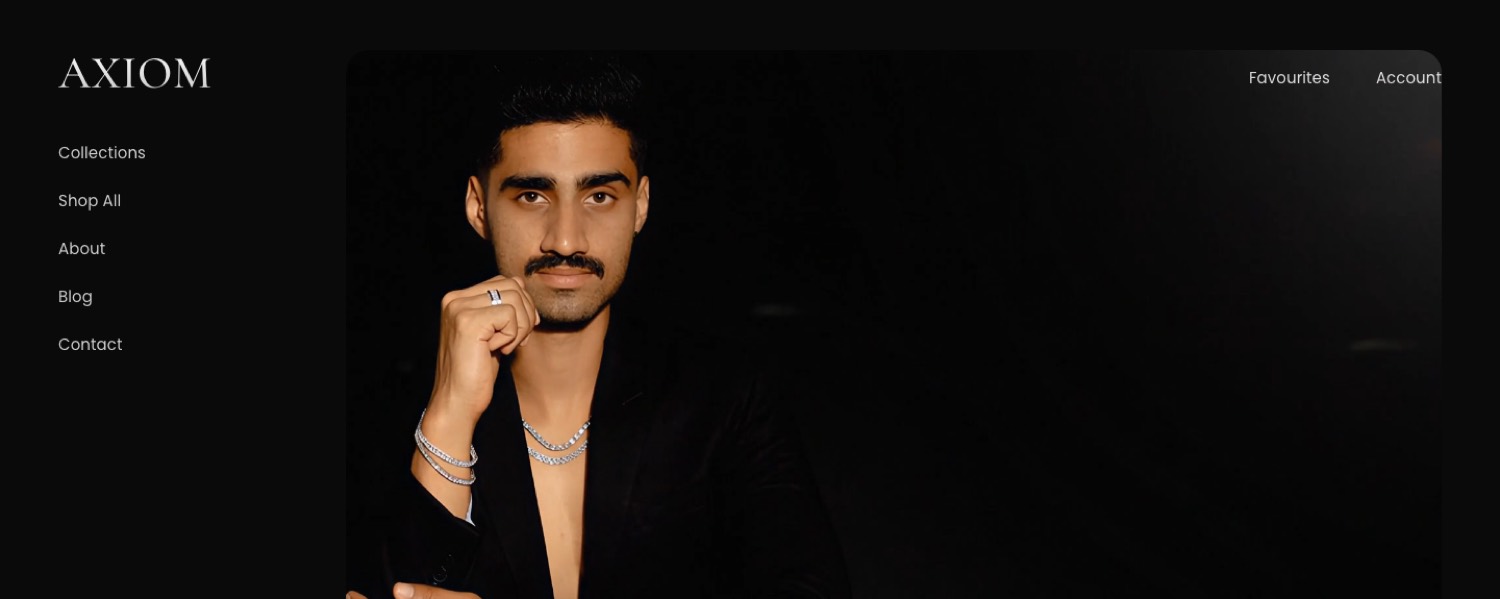
On the cinematic end, our 3D and cinematic website service covers the award-grade lane. The Streets of Punk site is a single graded WebGL film where the entire scroll plays as one continuous shot. Nugget Nation is a scroll-driven 3D brand site built from scratch with zero templates. Axiom renders bespoke men’s jewellery in real-time 3D on React and Three.js. You can see more of this work in our 3D website examples. Cinematic Flagship builds start from $3,000, which is a fraction of a flagship-agency invoice for comparable craft.
And here is the part most studios will not say out loud: if the honest answer is that you do not need award-grade work, we will tell you, and we will build the fast, credible site instead. Our business website service covers exactly that, and our Overnight Site ships a premium one-page build live in 24 hours for $399, with a simple guarantee: live in 24 hours or it is free, and you only pay when you love it. Same senior hands, right tool for the job.
How to brief for award-quality work
If you have decided you genuinely want award-grade design, here is how to get it instead of a beautiful mess.
- Lead with the concept, not the effects. Come with the idea you want the site to express, not a list of animations you saw elsewhere. The best studios build outward from a single concept. If you hand them one, the work gets sharper.
- Insist on performance targets. Ask how the build will perform on a mid-range phone, and get it in writing. Award-grade motion that janks is just jank. Performance is not a nice-to-have, it is part of the craft.
- Ask whether you actually need real-time 3D. Many “3D” goals are better served by a pre-rendered frame sequence scrubbed on scroll: cheaper, smoother, and it reads as fully custom. A good partner recommends this when it fits instead of upselling live WebGL.
- Confirm ownership and maintainability. Some flagship builds are gorgeous and nearly impossible to edit later. Insist on 100% code ownership and a site your team can actually maintain after launch.
- Match scope to your real moment. One distinctive, high-converting page often beats a sprawling multi-page production. Spend the ambition where the visitor actually decides.
Want screenshot-worthy craft without the agency invoice?
Tell us what you are launching. We will look at whether you actually need award-grade design or a fast credible site, say so honestly, and give you a fixed-price range either way. Cinematic Flagship builds start from $3,000, and the Overnight Site is $399, live in 24 hours or it is free.
Start a project or book a free 15-minute call.
More studio comparisons
- Best IDEO alternatives. Research and product design firms compared, with honest takes.
- Best Frog Design alternatives. Where frog fits, and who does the same work for less.
- Best ThoughtWorks alternatives. Engineering partners for startups, compared by stage.
FAQ
What does "award-winning website design" actually mean?
It refers to work recognized by peer-judged programs, chiefly Awwwards, FWA (Favourite Website Awards), and CSS Design Awards, where working designers and developers score submitted sites on design, usability, creativity, and technical execution. You can submit but you cannot buy a top honor like Site of the Day, which is why the phrase carries weight. In practice, award-grade sites share five traits: one strong concept, restraint, motion that serves meaning, flawless performance, and obsessive craft in type and spacing.
What are the main website design awards?
The three most respected are Awwwards, which awards Site of the Day, Month, and Year based on jury and community scoring; FWA, one of the oldest programs, which rewards technically ambitious and experimental work; and CSS Design Awards, which focuses on front-end UI, UX, and innovation. Awwwards is the broadest signal of exceptional craft, FWA leans toward engineering daring, and CSS Design Awards skews toward clean interface execution.
What separates award-winning websites from good ones?
Five things you can see when you compare them side by side: a single strong concept that every section serves, restraint in palette and type rather than piling on effects, motion that reveals structure or makes a product tangible instead of decorating, flawless performance on real devices including mid-range phones, and craft in the last ten percent, optical spacing, a considered type scale, and intentional interaction states. The concept and the performance are the hardest to fake and the reason award-grade work cannot be assembled from a template.
Do I need an award-winning website for my business?
Most small businesses do not. If you sell a clear service and just need to be trusted and contacted, a fast, credible, obviously-clear site converts better than a slow, ambitious one, and your money is better spent on traffic and offer. Award-grade design is worth it when you sell on taste, have a launch or flagship moment, compete against premium-looking rivals, or sell a physical product that benefits from being shown in motion. In those cases the craft is a competitive moat, not vanity.
How much does an award-grade website cost?
As a general 2026 market range, not a quote, the top flagship studios behind much of the Awwwards Site of the Year work typically price a single bespoke site in the six figures, often from around $60,000 and well past $150,000, because it is staffed by a full creative team over months. Boutique and founder-direct builders sit well below that. As a reference point, DappaSol builds cinematic Flagship sites from $3,000 at a fixed price with 100% code ownership.
Does DappaSol win website design awards?
We do not chase award submissions or claim specific trophies, and we will not pretend otherwise. What we do is build cinematic, screenshot-worthy sites with the same craft the awards reward: senior-led and founder-direct, at a fixed price agreed up front, with 100% code ownership handed to you. Examples include the Streets of Punk cinematic scroll film, the Nugget Nation scroll-driven 3D brand site, and the Axiom real-time 3D jewellery renders. Cinematic Flagship builds start from $3,000.
Is an Awwwards-quality site worth it for a small business?
Usually not, and a good studio should tell you so. Very few customers will ever choose a small business because its scroll animation was beautiful, so for most SMBs the smarter spend is a clean, fast, credible site plus traffic and a strong offer. The exception is when being screenshot-worthy drives real business, such as press, partnerships, or recruiting, or when you are judged directly against premium competitors. If that is you, award-caliber craft pays for itself.
How do I brief a studio for award-quality work?
Lead with the concept you want the site to express rather than a list of effects you saw elsewhere, since the best work is built outward from one idea. Insist on written performance targets for mid-range phones, because motion that janks does not win. Ask whether you actually need real-time 3D or whether a cheaper, smoother pre-rendered frame sequence would read as fully custom. Confirm you get 100% code ownership and a site your team can maintain. And match scope to your real moment: one distinctive high-converting page often beats a sprawling multi-page build.
Reading about sites like these is not the same as having one. Tell us what yours has to do and you get a real number back, not a range. A flagship scroll build starts at a fixed $3,000. If you just need something sharp and fast, an Overnight Site is $399 and it is live in 24 hours.
Got it. If you gave an email, a confirmation is already on its way and Ishan replies within 24 hours. Prefer to talk now? WhatsApp us →